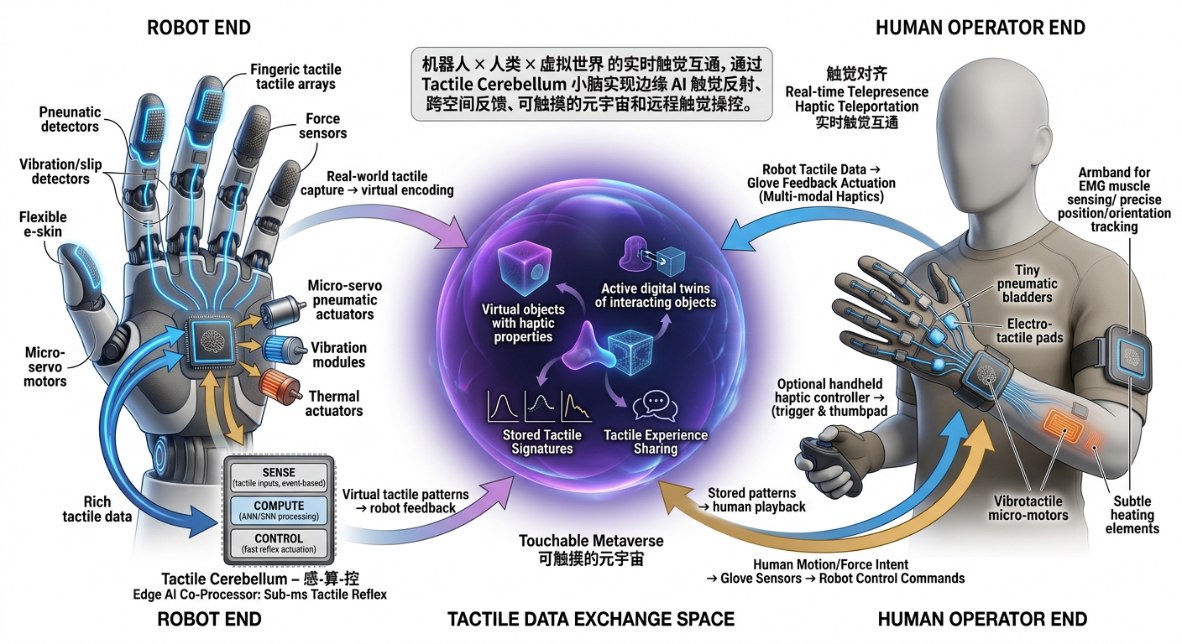
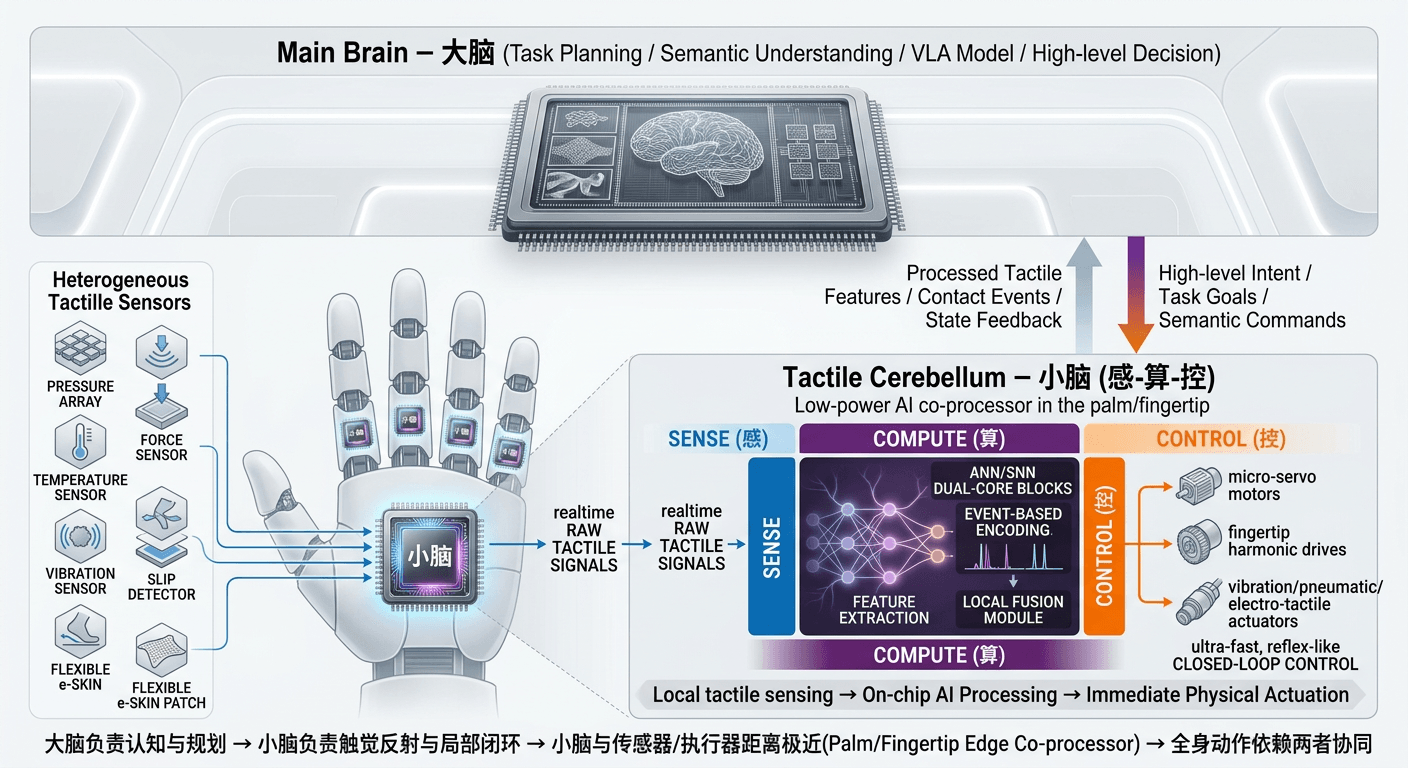
Acquires heterogeneous tactile signals such as pressure, force, temperature, vibration, slip and flexible electronic skin, giving robots reliable contact-sensing input.
A purpose-built haptic co-processing architecture with a sensing–computing–control (all-in-one) design, integrating sensing fusion, physical cognition computing and end-effector feedback control into a single on-device chip.
A fused architecture of charge-domain compute-in-memory (CIM) and spiking neural networks (SNN) that tackles the high power consumption and high latency of on-device haptic processing at the circuit level.
A software toolchain supporting automatic TFLite / ONNX deployment, together with our in-house data acquisition system and multimodal haptic data system.
A tactile benchmarking suite for embodied haptic tasks, so that the performance of different haptic solutions can be compared fairly and reproducibly.
Solutions and engineering support for dexterous hands and humanoid robots, collaborative robots and smart manufacturing, medical wearables, and XR haptic interaction.
HapticSystem builds a complete haptic technology chain from flexible sensing and signal processing to application feedback, so that tactile signals can truly be called upon effectively by robot models.
Tactile signals are high-frequency, strongly time-ordered and contain the whole contact process; simply layering them onto a vision model can actually degrade system performance. HapticSystem gives touch its own dedicated high-frequency processing path, which is the key difference from comparable tactile sensor solutions.
We keep improving the product through real robotic tasks, adapting it to different application needs such as precision grasping, industrial operations and safe human–robot interaction.
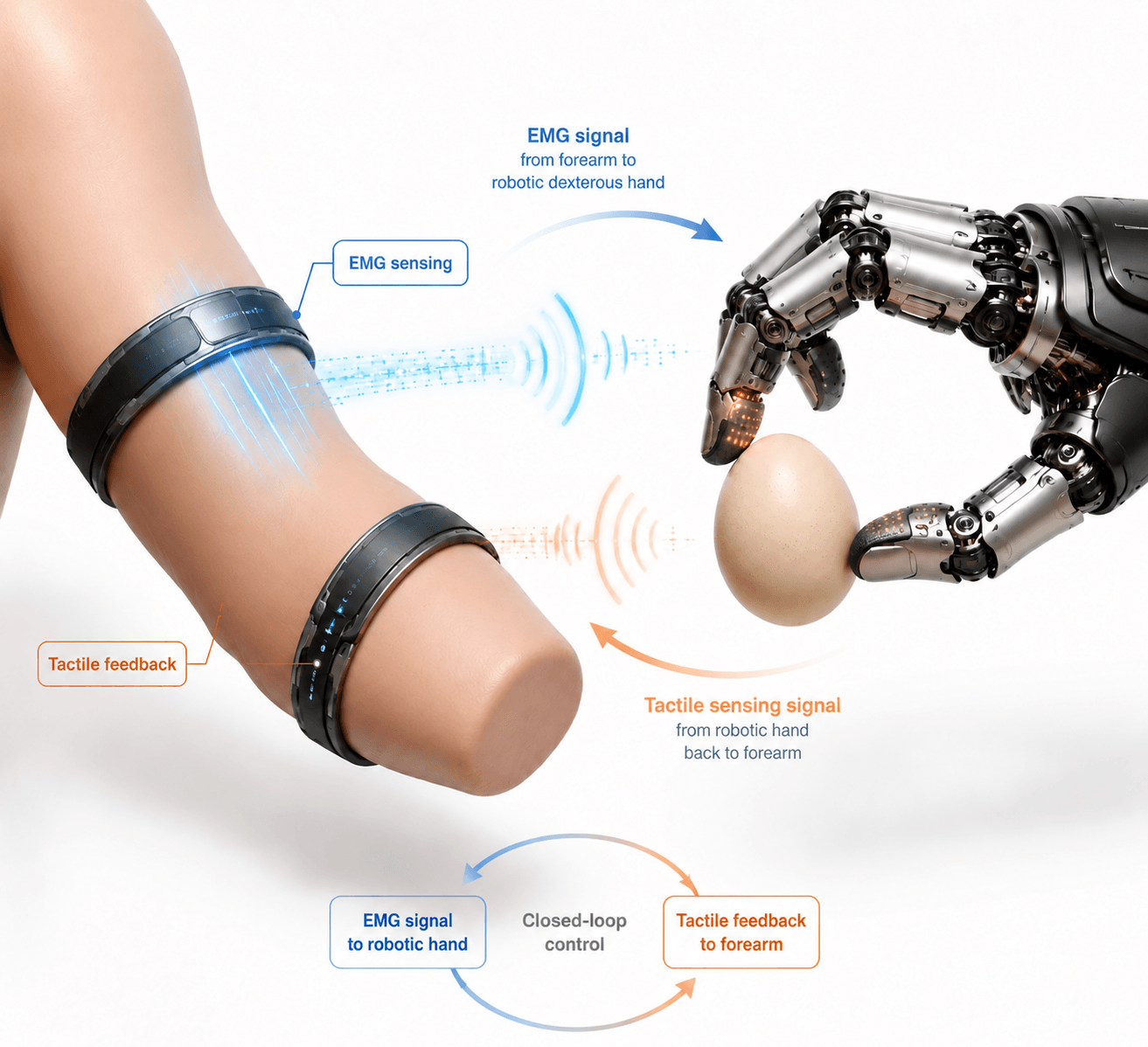
Judging "has it grasped the object", "is the force appropriate" and "is the object slipping", providing contact feedback for dexterous hands and robotic arms.
For collaborative robots and industrial inspection, providing stable and reproducible contact and force judgement.
In scenarios where humans and robots share a workspace, detecting collisions and contact in time to inform safety strategies.
If you want to understand solution fit, integration or the partnership process, start with the notes here. For more specific questions, you are welcome to contact our team directly.
It means integrating haptic sensing fusion (SENSE), physical cognition computing (COMPUTE) and end-effector feedback control (CONTROL) into a single on-device co-processing chip. Compared with the "general-purpose compute chip plus external tactile sensor" approach common in the industry, this architecture offers advantages in integration level, latency and cost.
It can handle heterogeneous tactile signals such as pressure, force, temperature, vibration, slip and flexible electronic skin. Because robots today use many kinds of tactile sensors with differing interfaces and data formats, HapticSystem connects different tactile devices through a fairly general-purpose hardware and software platform; the exact fit needs to be assessed model by model.
Tactile signals are high-frequency, strongly time-ordered and contain the whole contact process; simply layering them onto a vision model can actually degrade system performance. Giving touch its own dedicated high-frequency processing path (dual ANN / SNN cores) is the key difference from comparable tactile sensor solutions. The quantitative results concerned are still to be confirmed; see the "Core Technical Metrics" section on the home page.
[To be confirmed: product status and availability] — please add the chip tape-out status, whether the SDK is available for trial, whether prototyping and evaluation are accepted, and the corresponding application process. This item is not yet confirmed and no commitment is made externally for now.
Submit your partnership enquiry through the Contact page or email us directly at info@hapticsys.com. We will arrange the right colleague to follow up: first a needs and fit assessment, then we agree on the form and timeline of the partnership.